New Ozempic Side Effect Reported: A Large Share Of Users Complain About Bad Breath. Here Are 7 Reasons Why, And How To Fix It.
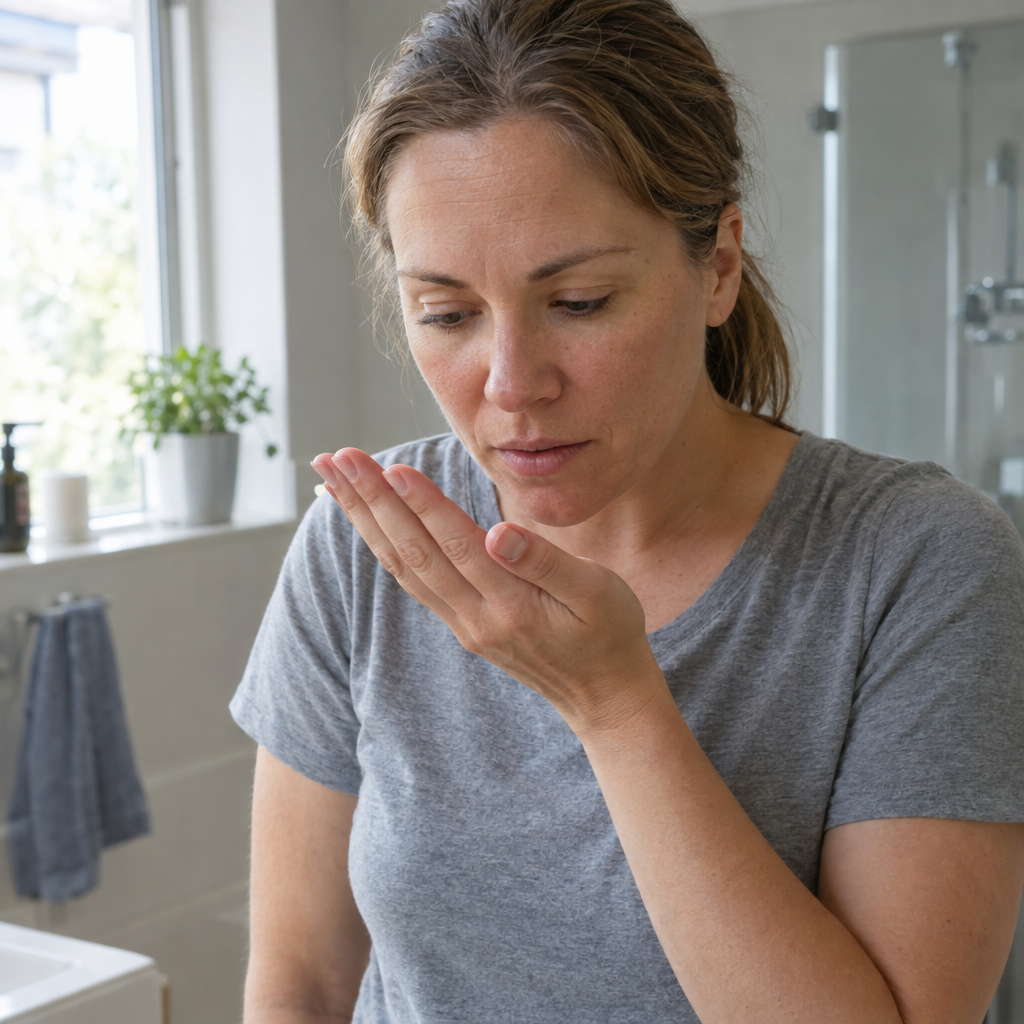
A few weeks in, people taking GLP-1 medications like Ozempic keep reporting the same thing: a dry, sticky mouth, a sour taste by lunch, a partner who finally says something. Dentists are seeing it too, and some now call it 'Ozempic breath'. What these users are switching to is not a stronger mouthwash, which dries the mouth even more, but a spray that lands where the smell is coming from.
1. These medications dry the mouth out, and that is where it starts
The first thing people on GLP-1 medications like Ozempic report is a mouth that feels like cotton by mid-morning. Users say they make noticeably less saliva, and the habits that come with a smaller appetite make it worse: fewer meals, queasy mornings, no urge to reach for a glass, so they drink less too. A mouth short on saliva that also gets less water dries out twice over. The sticky feeling on the lips and tongue is usually the first sign, and the breath follows a few hours after brushing.
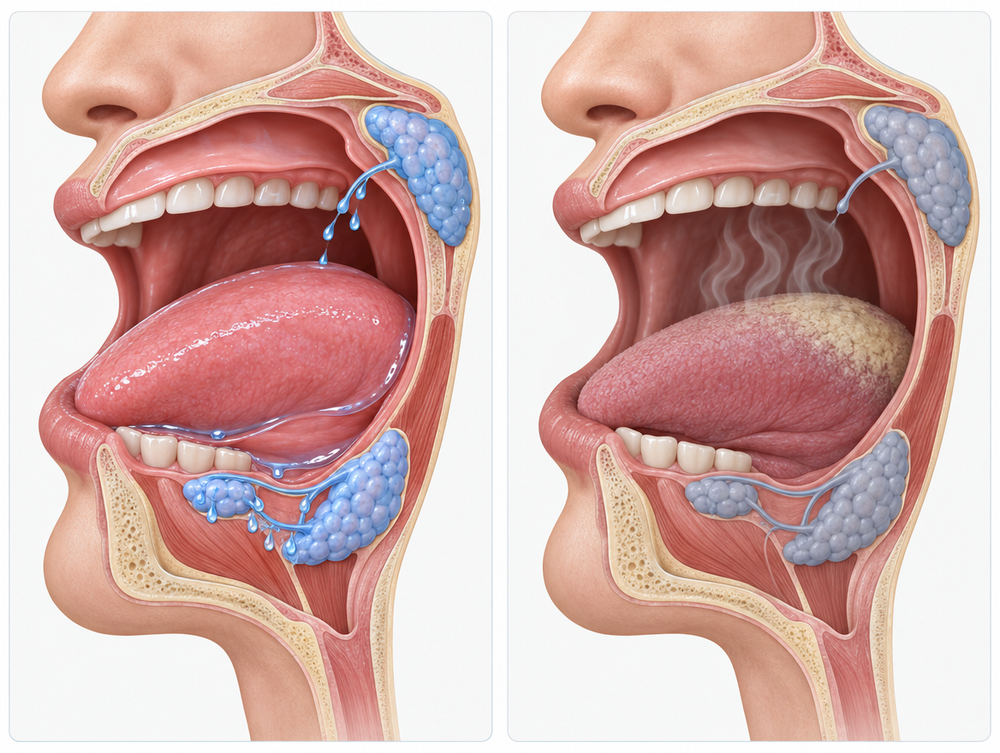
 Without Ozempic
 With Ozempic
2. With less saliva, nothing cleans the tongue anymore
Saliva is not just moisture. Dentists point out that it is what keeps odor bacteria from settling on the tongue and the throat, washing them away all day without anyone noticing. Take most of it away and the bacteria stick, multiply and stay, right at the back of the tongue where a brush does not comfortably go. That is why the breath goes stale a couple of hours after brushing, even for people who never had an issue before. A sip of water helps for a minute, then the dryness comes back, and the smell with it.
3. Eating far less means the tongue never gets scrubbed
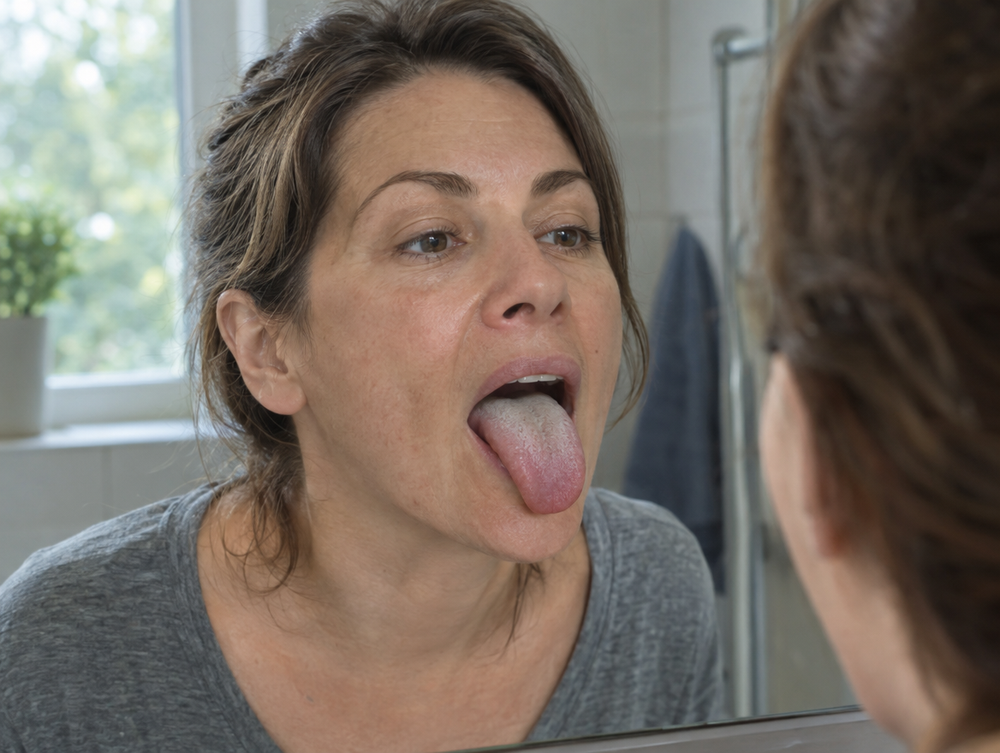
Nobody thinks of chewing as cleaning, but it is. A full meal drags across the tongue and wears off the film that builds there during the day. People on GLP-1s describe eating a third of what they used to, in smaller bites, with long gaps between meals. Dentists are seeing the result: a thicker white coating on the back of the tongue, because nothing is rubbing it away anymore. That coating is where the smell lives, and it grows quietly for as long as the appetite stays small.
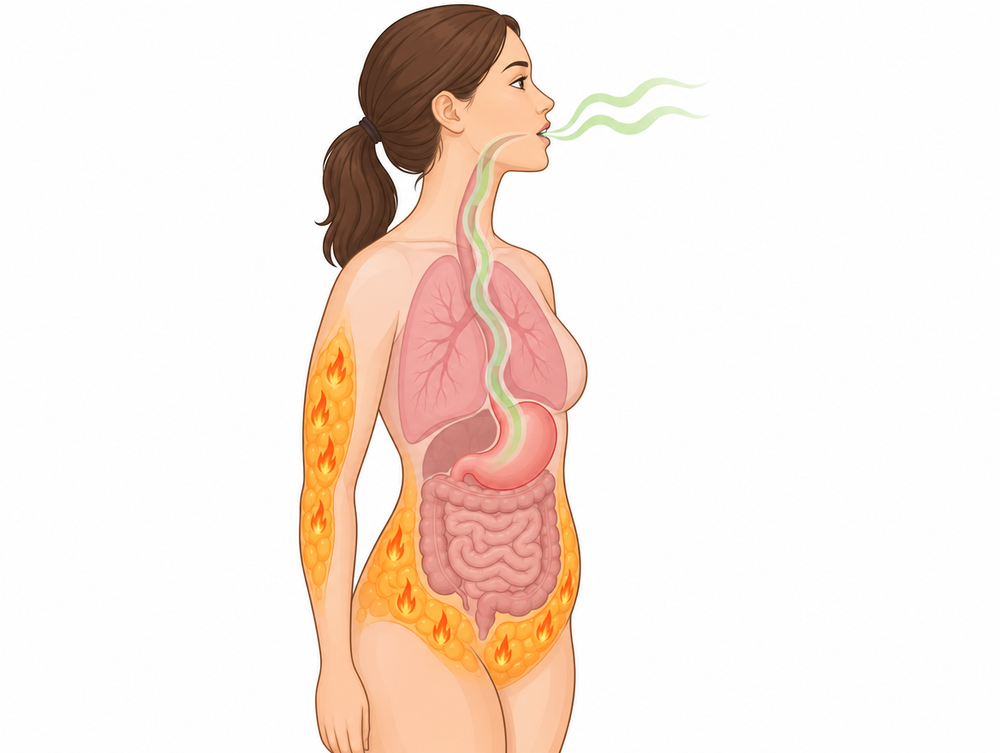
4. Burning fat gives the breath a sharp smell people recognize
Anyone who has tried a low-carb diet knows this one. When the body runs on its fat stores instead of food, it gives off a distinct sharp, slightly fruity smell that comes out on the breath. People eating very little on these medications report the same thing, often without connecting the two. A toothbrush cannot touch it, because it is not coming from the teeth. It sits on top of everything else on this list and makes the dry-mouth smell sharper than it would be on its own.
5. Digestion slows down, and a sour note comes up
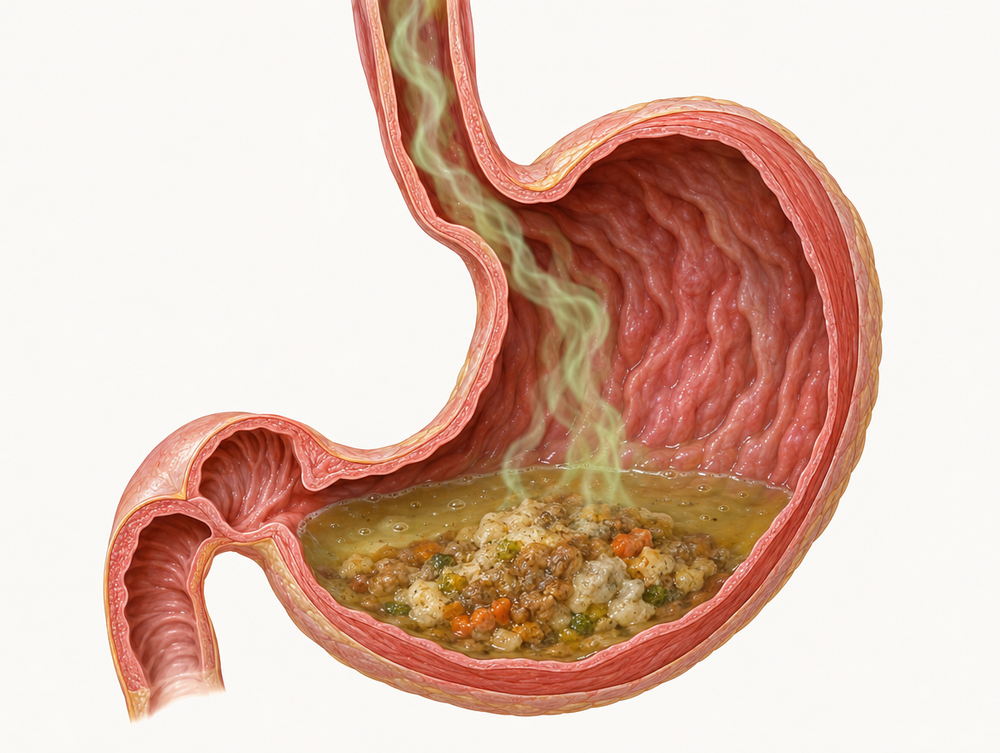
People on GLP-1s often say food sits in the stomach longer, which is part of why they feel full on so little. Users describe the downside: a heavy, sour taste that rises an hour or two after eating, and sometimes small acid burps that linger. That sour note settles on the back of the tongue and mixes with everything already there. People say it is strongest in the afternoon and after dinner, exactly when they used to feel fine. A mint covers it for a few minutes, then it is back.
6. The white coating on the back of the tongue is where the smell lives
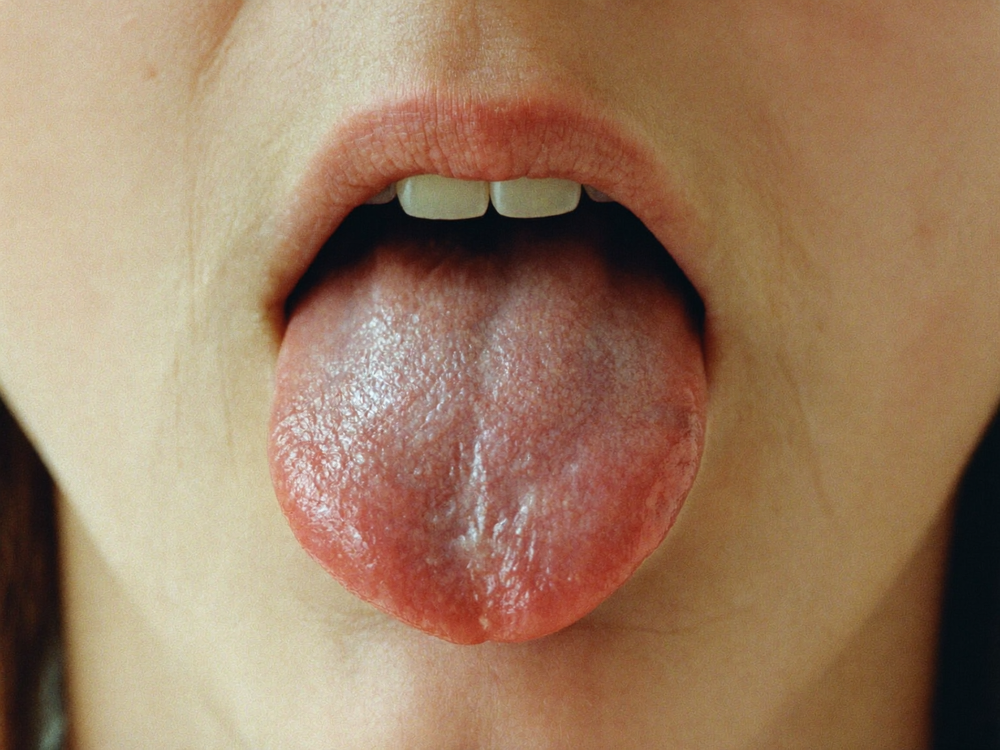
Put reasons one through five together and they all land in the same place. Less saliva, less chewing, less water, a sour note from below and a sharp one from the body: each feeds the pale film on the back of the tongue, and that film is where odor bacteria live. Dentists are seeing it thicker on patients a few weeks into these medications. It sits far back, behind where a brush comfortably goes, which is why brushing more often changes almost nothing. Thin the coating and the breath follows.
7. The usual fixes make it worse, and that is the real problem
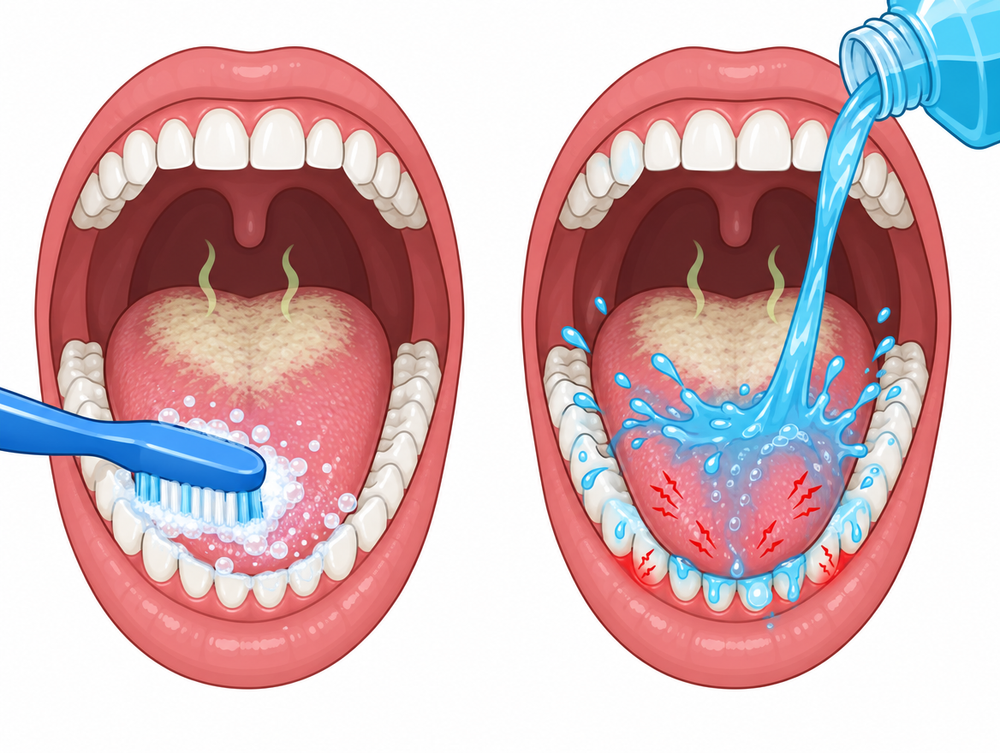
Here is the part that frustrates people most. The first habit is brushing harder and more often, which only cleans the teeth and the very front of the tongue and leaves the coating at the back untouched. The second is a stronger mouthwash, and most of those run on alcohol: it stings, irritates an already dry mouth, strips what little saliva is left, and the coating grows back faster. Mints and gum then cover the smell for about twenty minutes. None of these tools were made for a dry mouth or the back of the tongue. The fix has to be.
Here's why, and how to fix it
Every reason above ends in the same two places: too little saliva, and a coating on the back of the tongue that nothing reaches. Take care of those two and the breath changes, with nothing about the medication changing at all.
Less saliva, more bacteria
Saliva is what keeps odor bacteria from sticking. When the mouth runs dry, they settle on the back of the tongue and throat, multiply, and nothing washes them away. Brushing more does not bring saliva back, and alcohol mouthwash strips what little is left.
The smell lives where brushing never goes
Brush, floss and mouthwash all work on the front of the mouth. The coating sits on the back of the tongue and the top of the throat, where a brush triggers a gag and a liquid just passes over. The smell stays because the tool never got there.
The fix people are switching to
It is an alcohol-free spray with a long, angled nozzle that lands on the back of the tongue and throat, the spot the brush skims past. Zinc and xylitol make it harder for odor bacteria to stick there, so the coating has a hard time rebuilding. Menthol gives a cool, clean feel right away without drying anything.
Two sprays after brushing, morning and night. Ten seconds. People report fresher breath within days and the best results after two to four weeks, for as long as they keep using it.
Nothing about the medication changes. Keep taking it as prescribed. This only changes the breath.
Temporary deal Biggest discount + 3 free gifts
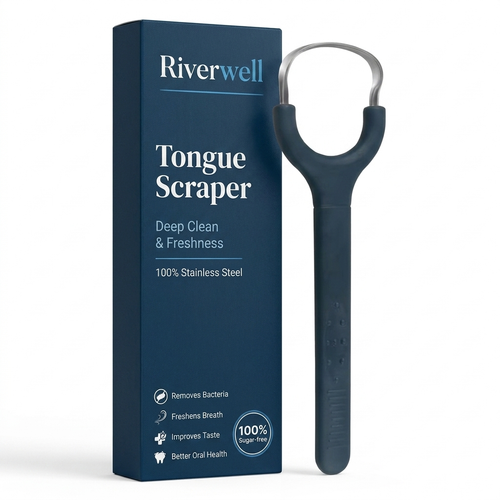
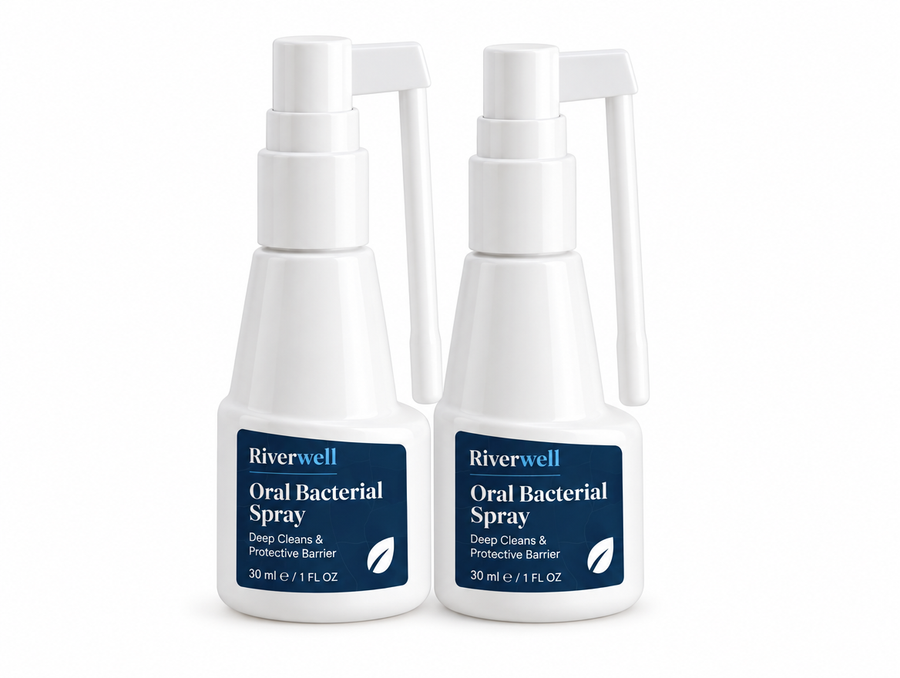
- Biggest discount on the 2-spray pack
- + FREE Tongue Scraper
- + FREE Mystery Gift To Try
- + FREE Shipping
- 60-day money-back guarantee
What people a few weeks in are saying
Three people whose breath changed when their eating did, in their own words. Different stories, one thing in common: the usual fixes dried them out and this didn't.
Why mouthwash and mints make it worse, and this doesn't
| Riverwell | Others | |
|---|---|---|
| No alcohol, so nothing dries the mouth further | ✓ | ✕ |
| Reaches the back of the tongue and throat | ✓ | ✕ |
| 10 seconds, right after brushing | ✓ | ✕ |
| Makes the coating harder to rebuild | ✓ | ✕ |
| Changes the smell instead of covering it | ✓ | ✕ |
Ready to stop worrying about your breath?
You get the alcohol-free spray that lands on the back of the tongue without drying the mouth, plus the free extras while the deal is on. Two sprays after brushing, fresher breath within days, best results in two to four weeks, and a 60-day guarantee if it isn't for you.
- Alcohol-free, lands on the back of the tongue in 10 seconds
- Fresher breath within days, best results in two to four weeks
- 60-day money-back guarantee
- (Temporary deal) Biggest discount + 3 free gifts