


Top 5 Tonsil Stone Removal Tools to Consider in 2026
Admin
Can you see a tonsil stone clearly before bringing a tool near it? The top 5 tonsil stone removal tools to consider in 2026 differ in how they help you locate and remove a stone, from camera-guided devices to manual tools. If you are also considering ongoing care, our best tonsil stone cleaner for 2026 comparison covers a separate need: a cleaner is not a substitute for a tool designed to remove a stone that is already present.
Tonsil stones can fall out on their own, and not every stone needs to be removed. For ongoing discomfort, bad breath, or difficulty swallowing, seek medical advice; Healthdirect’s guidance on tonsil stones explains when to contact a doctor. The options below are ranked by practical visibility and removal approach, not by claimed clinical success. Availability, prices, shipping, and return terms can vary by destination, so check current details before ordering.
Top 5 tonsil stone removal tools in 2026: quick comparison
The main differences are whether you can inspect the tonsil area, how the tool contacts or removes a stone, and what setup the process requires. The table summarizes the approaches, not a claim that any tool is suitable for every person.
| Rank | Tool | Visibility and removal approach | Setup and practical details |
|---|---|---|---|
| 1 | Tonsil Stone Removal Complete Kit & Camera UHD | Phone-connected LED camera with reusable removal tools and an irrigation syringe | Rechargeable camera; free app for iOS and Android; clean reusable parts after use |
| 2 | AURYX tonsil-removal system | WiFi camera with adjustable suction | Phone WiFi and browser viewing; powered device and removable tip |
| 3 | Tonsil Tech removal tools | Manual, long-handled tool design | No camera-assisted phone view described; position the tool yourself |
| 4 | Nevis Oral tonsil-stone kit | LED light and mirror with manual tools and a syringe | Traditional tool set; the lighting tool uses batteries |
| 5 | Oralis Tonsilvision | Camera and app-based viewing, with a soft tip and suction described | Phone and powered-device setup; confirm current requirements for your destination |
1. Tonsil Stone Removal Complete Kit & Camera UHD
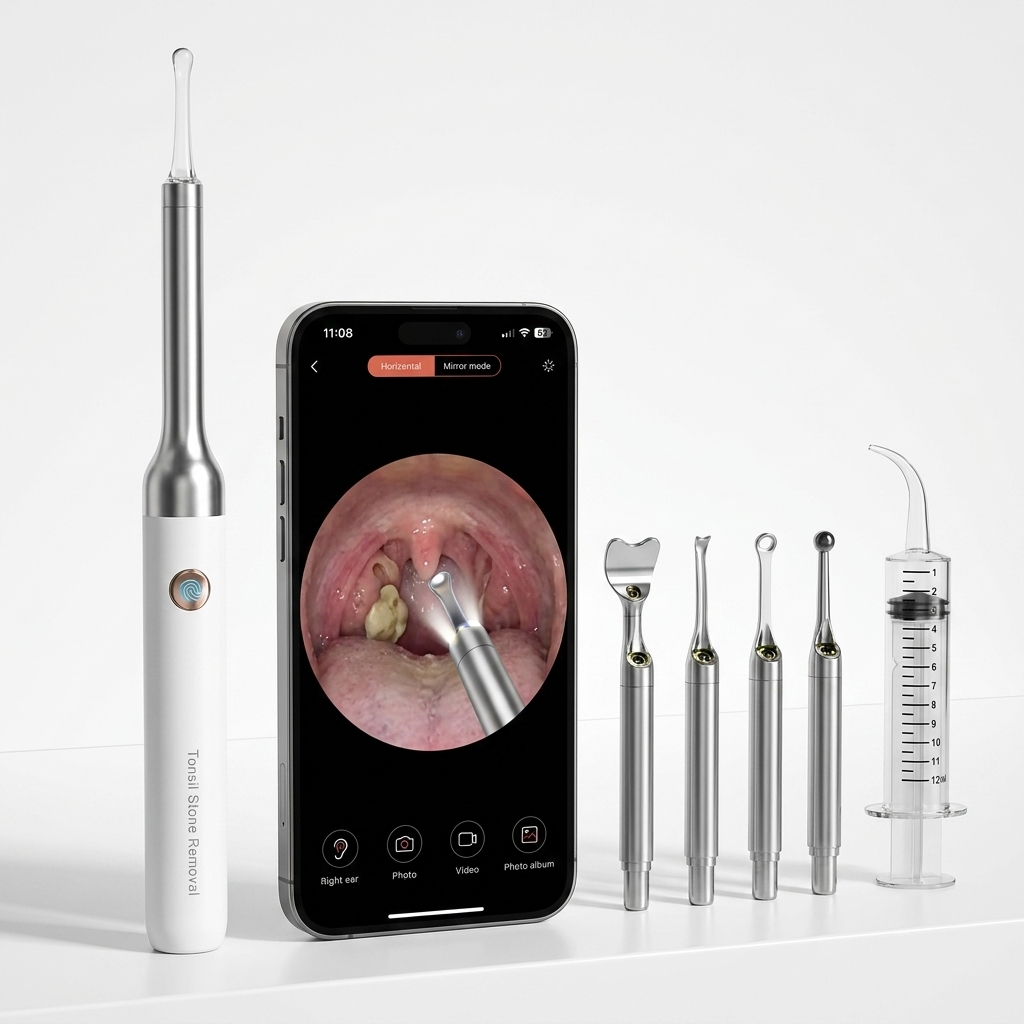

Best for: You want a direct view of the tonsil area before choosing a removal tool, plus several reusable tool shapes.
Our Tonsil Stone Removal Complete Kit & Camera UHD combines a rechargeable LED camera that streams to a phone with removal tools and an irrigation syringe. It works with a free app for iOS and Android. The kit includes five reusable food-grade stainless-steel tool shapes, a tongue depressor, a storage case, and a quick-start guide. This camera-guided view can help you inspect the area before attempting gentle contact, rather than relying on a mirror alone.
Riverwell displays a 4.8-star average based on more than 2,140 verified reviews and says the kit has been used by more than 12,000 customers. These are company-reported, undated customer signals, not comparative clinical evidence. Our stated 60-day money-back guarantee is another purchase consideration; review the current terms before ordering. For further comparison, see our tonsil stone removal kit guide.
Pros
- The camera and phone view let you inspect the area before selecting a tool.
- Five reusable tool shapes offer more choice than a single manual tip.
- The kit includes an irrigation syringe, tongue depressor, and storage case.
Cons
- The camera needs charging, and the reusable parts need cleaning after use.
- You need a compatible phone to use the app-based view.
2. AURYX tonsil-removal system
Best for: You prefer a camera view paired with adjustable suction rather than a purely manual tool.
AURYX describes a WiFi camera system with an LED light, adjustable suction, a syringe, and a tongue scraper. Its phone view uses the device’s WiFi connection and a browser rather than a required app download. This approach combines visual guidance with powered extraction, but adds connection and device setup compared with a simple manual tool. The published free-shipping language is US-specific, so international buyers should confirm shipping and return terms for their destination.
Pros
- Camera viewing and adjustable suction are combined in one system.
- The described setup uses a phone browser rather than requiring an app download.
Cons
- WiFi setup and powered suction add steps compared with manual removal tools.
- Check destination-specific delivery and return details before purchase.
3. Tonsil Tech removal tools
Best for: You want a manual tool and prefer not to set up a camera, app, or powered device.
Tonsil Tech describes a long-handled removal tool with a scoop-style head. Its manual approach avoids charging and phone setup, but it does not provide a live phone view; you must position the tool using your own lighting and visibility. That trade-off may suit someone who can clearly see an accessible stone, but it offers less visual guidance when a stone is difficult to locate.
Pros
- The manual design avoids batteries, charging, and app setup.
- A long handle provides a direct tool-based approach for visible stones.
Cons
- You must guide the tool without a camera-assisted view.
- Careful positioning is important around sensitive tissue.
4. Nevis Oral tonsil-stone kit
Best for: You prefer a traditional kit combining light, mirror, and several manual tools.
The Nevis Oral kit describes an LED lighting tool, dental mirror, steel pick, tongue scraper, and water syringe. The light and mirror can help you inspect the area without a phone, while the syringe offers a separate flushing option. This is a broader manual set than a single pick, but you still need to align the mirror and light and position each tool carefully. The company lists a 30-day return period; confirm current eligibility and shipping details for your location.
Pros
- The kit combines a light, mirror, pick, scraper, and syringe.
- It offers a non-app-based alternative to camera systems.
Cons
- Manual visibility depends on your mirror angle, lighting, and positioning.
- The lighting tool uses batteries, which may need replacing.
5. Oralis Tonsilvision
Best for: You prioritize camera-assisted inspection and a soft-tip, suction-based approach.
Oralis describes a camera and app-based view, with a soft tip and suction for removal. That combination may appeal if a bathroom mirror does not give you a useful view. As with other powered camera options, you will need to prepare the phone and device, then follow the product’s instructions. Check the current product details for phone requirements, cleaning guidance, price, shipping, and returns before deciding.
Pros
- Camera viewing is central to the described approach.
- A soft tip and suction provide an alternative to a manual pick or scoop.
Cons
- Phone and device setup involve more steps than a manual tool.
- The soft-tip suction approach may not suit someone who prefers direct manual contact.
How should you compare visibility, control, and safety?

When comparing a tonsil stone removal tool, start with whether you can see the stone clearly. A phone-connected camera provides one type of view; a mirror and light provide another. If the stone is not visible, adding a longer or sharper tool does not necessarily make removal easier or more controlled.
Next, consider the contact method. Manual tools require careful positioning, while suction or irrigation adds powered or water-based steps. A water stream should be easy to direct and gentle; ask a clinician whether home removal is appropriate if you have recurring symptoms or concerns. Our oral irrigator for tonsil stones article discusses irrigation as one option, not as a guaranteed solution.
Also check charging, phone requirements, included accessories, and how reusable parts should be cleaned and stored. These details affect whether a tool fits your routine. A tool with more attachments is not automatically a better fit if you cannot position or clean it comfortably.
When should you avoid at-home removal?
Small tonsil stones may pass without intervention. The American Academy of Family Physicians describes tonsilloliths as generally managed expectantly, with routine oral hygiene and saltwater gargles among conservative measures. Its clinical review of tonsilloliths provides additional context.
Some home methods may be appropriate for some people, but stop if a tool causes discomfort. Cleveland Clinic describes gentle home approaches and recommends speaking with a healthcare provider when home care is not working or stones keep returning; see its tonsil stone treatment guidance. Seek professional care for pain, bleeding, swelling, difficulty swallowing, or a large or persistent lump.
Conclusion
The right choice depends on whether you need a clearer view, manual simplicity, or a powered removal method. For camera-assisted tonsil stone removal, our kit combines phone viewing with multiple reusable tool shapes and an irrigation syringe. Whichever option you consider, prioritize visibility, gentle control, straightforward cleaning, and current terms for your destination. Stop if removal is uncomfortable, and seek professional advice when symptoms persist.
See Tonsil Stones More Clearly at Home
If you can feel a stone but cannot locate it easily, a camera-assisted view may help you inspect the area before choosing a tool. Our Removal Kit is designed for seeing and addressing stones already present, while its reusable components require careful cleaning after each use.
The kit includes a rechargeable LED camera, phone viewing through a free app for iOS and Android, five reusable food-grade stainless-steel tool shapes, an irrigation syringe, a tongue depressor, a storage case, and a quick-start guide. Our stated 60-day money-back guarantee applies to our products; review the current terms before ordering. Explore our tonsil stone removal kit with camera to check the details.
Frequently Asked Questions
Which type of tool is easiest to use?
That depends on your visibility and comfort. A camera can show the area on a phone, while manual tools avoid device setup but require you to position them yourself.
Can an oral irrigator remove tonsil stones?
A gentle water stream may help dislodge some debris, but control and positioning matter. Stop if irrigation causes discomfort and seek professional advice if symptoms persist.
Do camera-assisted tools work with every phone?
Phone support varies by product. Check the exact app or connection requirements for the device and your phone before buying.
How should reusable removal tools be cleaned?
Follow the tool’s own care instructions. In general, reusable parts should be cleaned and dried between uses, then stored in a clean place.
When should you seek professional care?
Ask a healthcare professional about persistent or large stones, pain, bleeding, swelling, or difficulty swallowing. Do not continue trying to remove a stone if a tool causes discomfort.


